
Kapitoly o slovesném vidu nejen v češtině
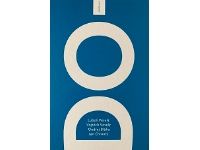
Luboš Veselý (ed.)
Akropolis, Praha 2020
The book consists of four chapters. The first, Český vid v kostce, presents a brief summary of Czech verbal aspect. It attempts to present it in its complexity and in all circumstances. It also discusses everything that falls under aspect and to link it to all possibly related language phenomena in Czech. For example, the following relations are discussed: general lexical semantics of the verb – the nature of (im)perfectivity; the lexical meaning of the verb – aspect pairs; aspect – negation; aspect – tense. The second chapter, Aspect (un)pairedness of verbs with the prefix do- implying the same/similar preceding action (and related issues), analyses three so-called aktionsart groups whose shared characteristics is that they imply a preceding action which is the same or similar to the action being expressed: the verbs with the meaning ‘completing the action and achieving its resultsʻ (dostavět dům); verbs with the meaning ‘additional actionʻ (dosolit polévku); and verbs with the meaning ‘simple completion of the action without achieving any resultʻ (dítě doplakalo).
The third chapter, Vidová nepárovost v češtině ve srovnání s ruštinou, is based on the thesis that the choice of the verb form of a certain aspect is relatively obligatory in Russian, whereas in Czech the choice is relatively free. In this context, the hypothesis of a possible correspondence of this fact with the overall nature of the aspect system of both languages is tested – with the inventory of aspect pairs being more complete in Russian and less complete in Czech. The fourth chapter, Metody výzkumu vidu a způsobu slovesného děje, summarizes and critically analyses the methods used in aspect research. Three general methodological approaches are discussed – introspective, corpus-based and behavioural methods. As far as behavioral methods are concerned, those using reaction times, eye movement tracking and elicitation of language production are discussed.